news
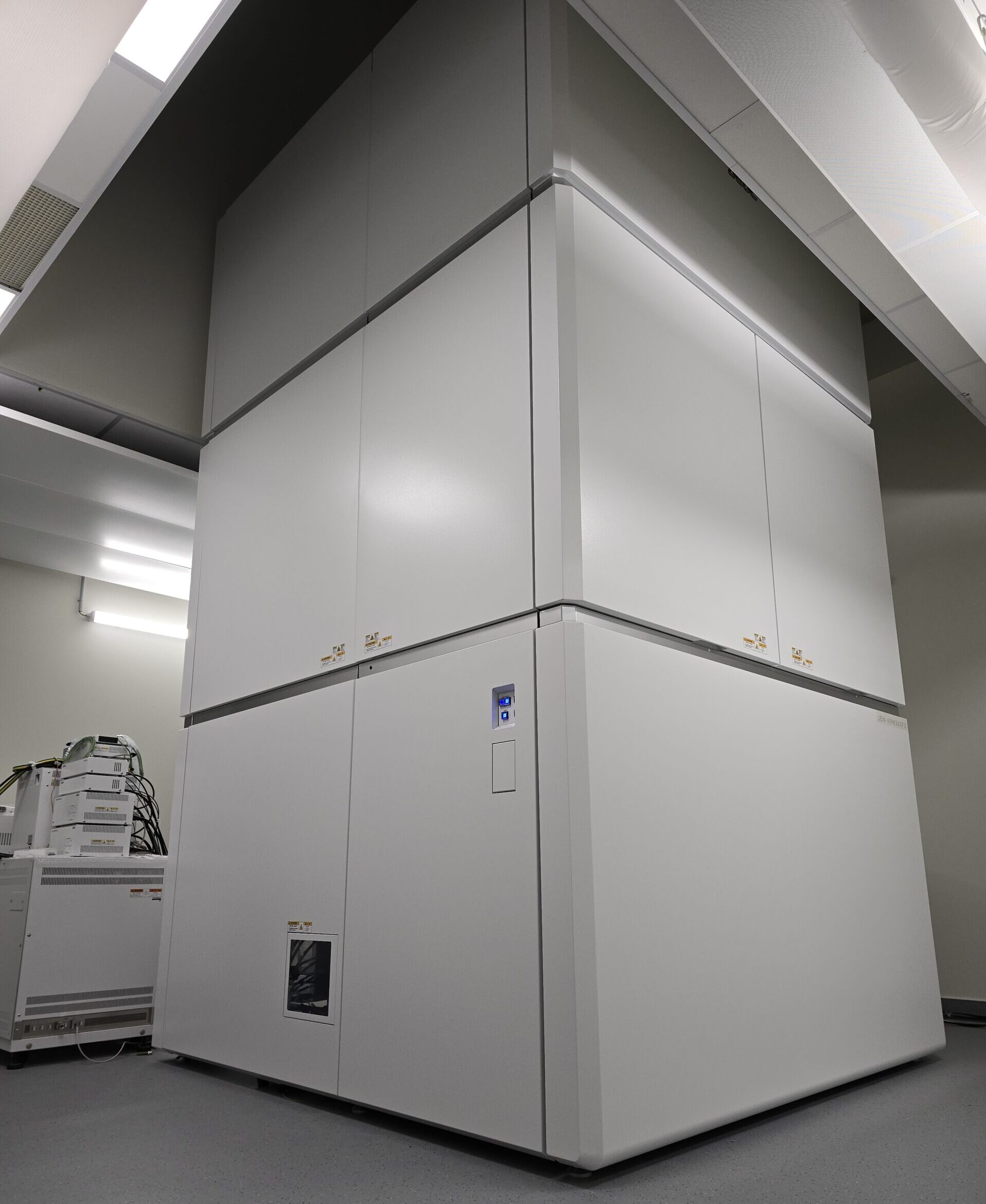
Installation du grand ARM300 F2
CAMERA
Caméras à détection directe d’électrons (DED) pour une acquisition à haute cadence et haute sensibilité, idéale pour les études dynamiques et les manipulations in situ.
Energy-Filtered TEM
imagerie filtrée en énergie pour la localisation des éléments ou fonctions chimiques à haute résolution spatiale..
Spectroscopie
2 Spectromètre EDS (Energy Dispersive X-ray Spectroscopy) : cartographie élémentaire en temps réel avec détection à grand angle pour les analyses quantitatives.
Spectromètre EELS (Electron Energy Loss Spectroscopy) à haute résolution énergétique (< 0.2 eV) pour l’étude fine des états électroniques, bandes interdites et plasmons.
Photochimie et photoélectrochimie in situ
OPERANDO est conçu pour les études sous irradiation lumineuse contrôlée grâce à un module d’introduction de lumière couplé à des fibres optiques. Cette configuration permet :
Nano Letters
2025
Just Accepted
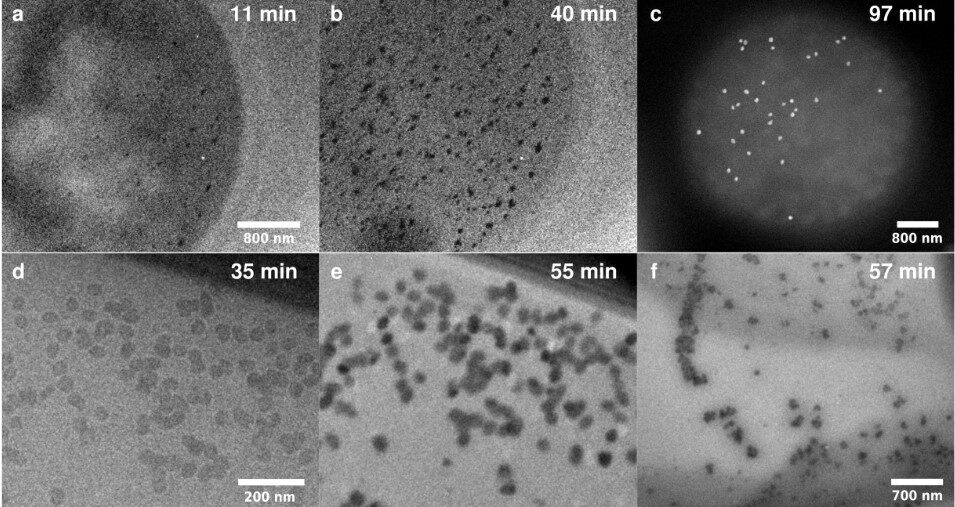
Dense liquid precursor in mineral crystallization: spinodal morphology and high viscosity evidenced by electron imagingDense liquid precursor in mineral crystallization: spinodal morphology and high viscosity evidenced by electron imaging
 téléchargement
Langmuir 2025
Just Accepted
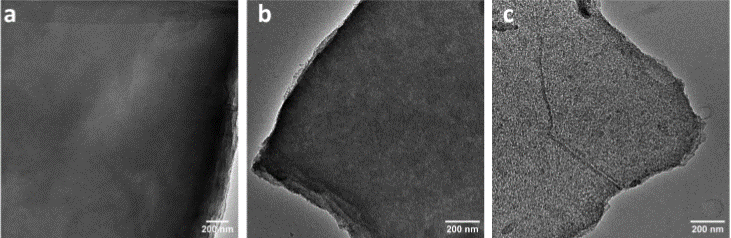
Multifunctional thick films obtained by Electrodeposition of 1,8-dihydroxynaphtalene, an Allomelanin PrecursorMultifunctional thick films obtained by Electrodeposition of 1,8-dihydroxynaphtalene, an Allomelanin Precursor
 téléchargement
Chemistry of Materials
2025
on going
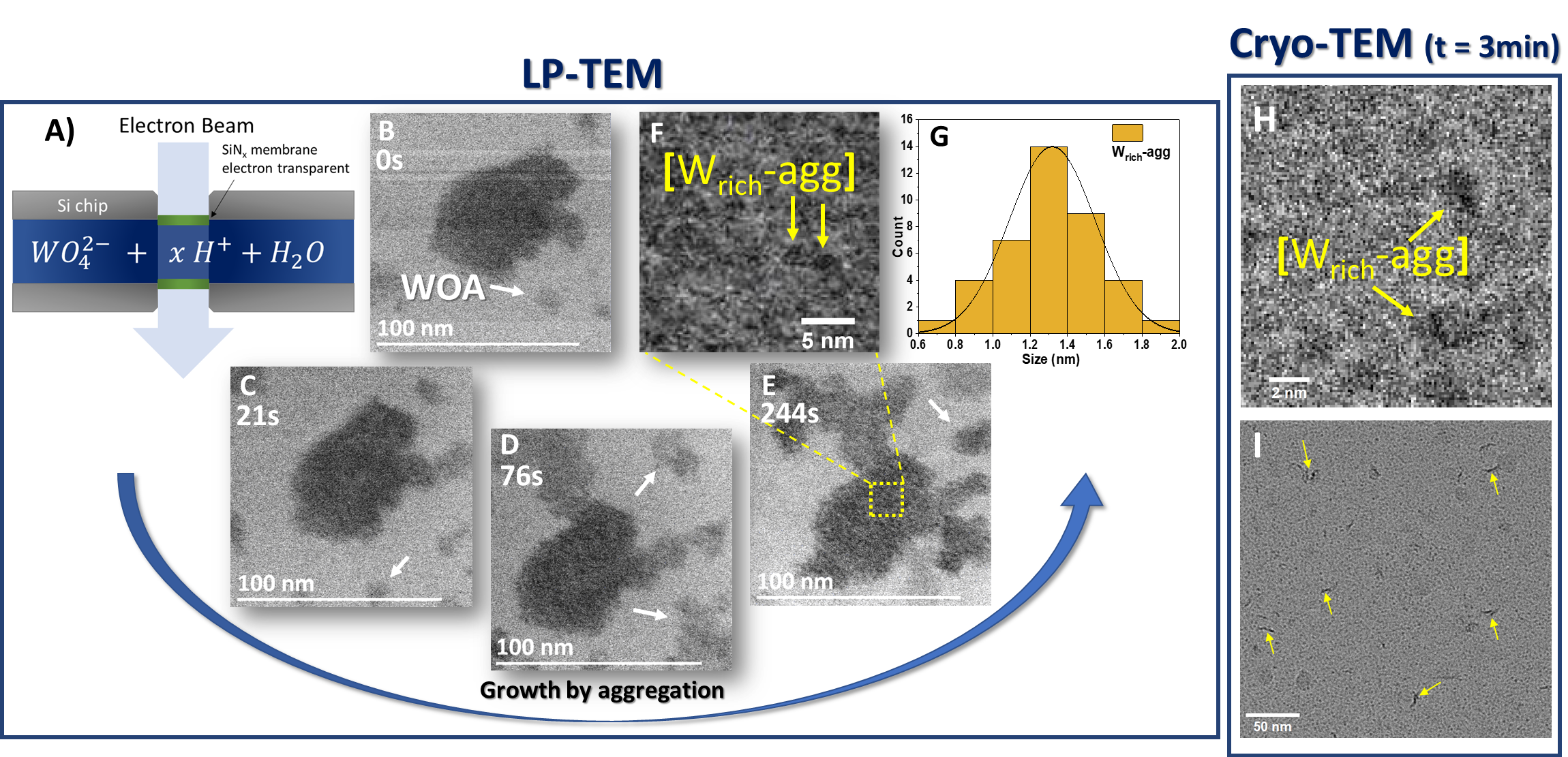
Chimie-Douce route to tungsten oxide hydrate: comprehensive insight into the formation mechanism by liquid-phase electron microscopy combined with complementary techniquesChimie-Douce route to tungsten oxide hydrate: comprehensive insight into the formation mechanism by liquid-phase electron microscopy combined with complementary techniques
Nanoscale
2025
Just Accepted
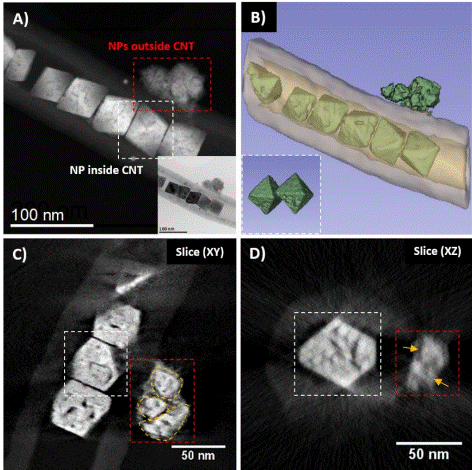
This study explores how carbon nanotube (CNT) confinement affects the formation of cobalt-based nanoparticles (NPs). NPs formed inside CNTs are larger (~50 nm), structurally uniform (Co-CoO), and grow anisotropically, while those on the outer surface are smaller (~20 nm), irregular, and more oxidized (Co₃O₄). In situ TEM shows that NP nucleation differs markedly between environments, with confined synthesis driven by capillary uptake and external growth initiated in vesicle-like solvent domains.
 téléchargement
Colloids and surfaces
2025
Just Accepted
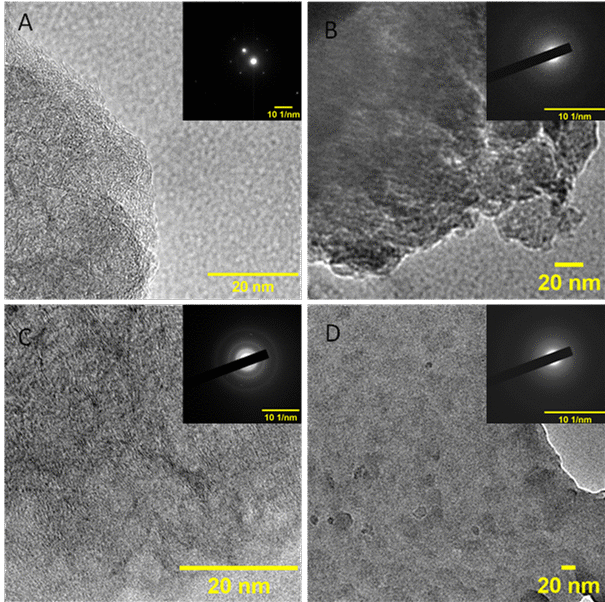
The study investigates the electrodeposition of dihydroxypyridine (DHP) isomers on carbon and gold electrodes, revealing that although 2,3-DHP, 2,5-DHP, and 2,6-DHP form films of similar thickness, they differ in surface properties, crystallinity, and morphology. All films exhibit antioxidant behavior, with 2,5-DHP-based films showing the most promising characteristics for future applications.
 téléchargement
Small
2025
Just Accepted
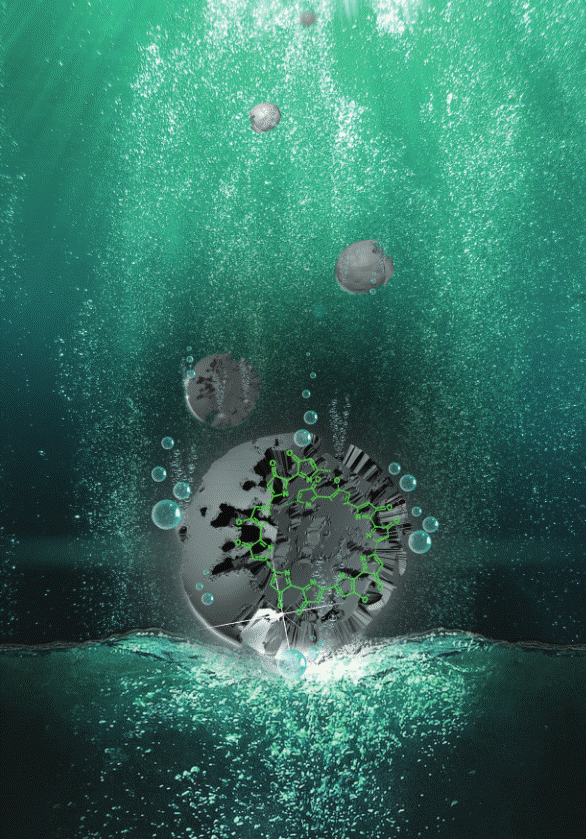
We developed polypyrrole-based organic nanoparticles that efficiently catalyze water oxidation under sunlight. These particles, produced by high-energy irradiation of aqueous pyrrole, absorb visible light and generate oxygen—and under certain conditions, hydrogen peroxide without requiring rare or expensive metals. Although hydrogen production is still kinetically limited, optimizing these organic catalysts could offer a sustainable path to clean fuel production from water and sunlight, addressing future energy and climate challenges.
 telechargement
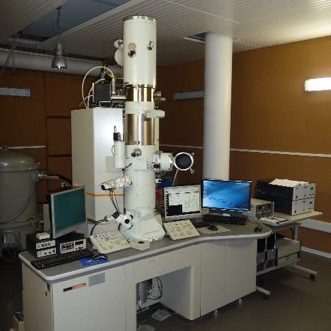
Microscopie electronique en transmission
Technique très puissante qui permet grace à un faisceau d’électrons d’observer la structure interne d’échantillons très fins avec une résolution atomique.
TEM JEOL2100F Corrigé
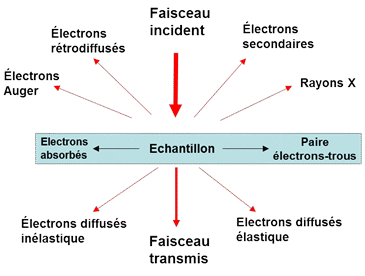
Interaction échantillon faisceau
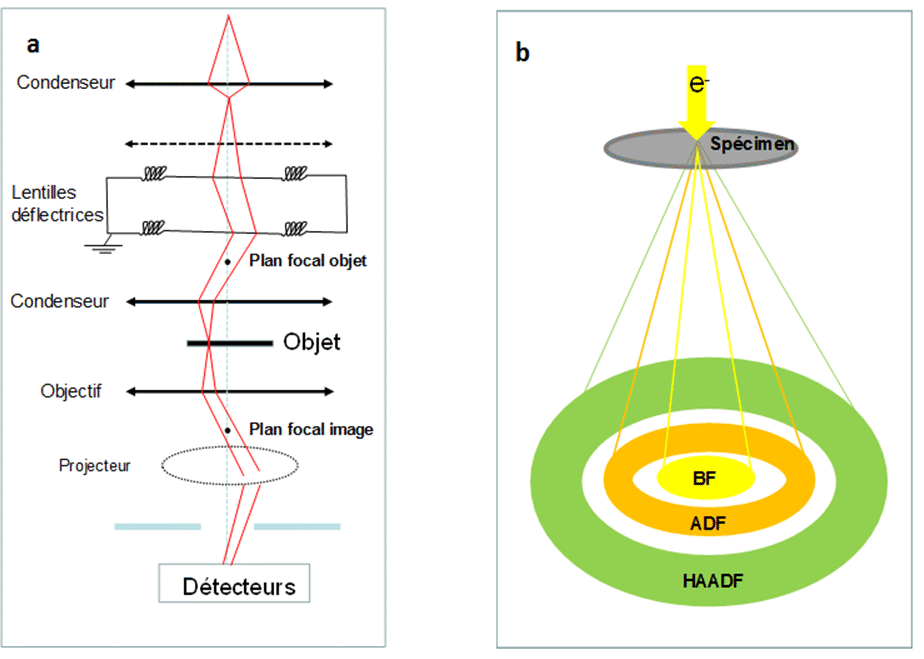
Trajet des électrons
Recherche – Collaboration – Transfert – Formation – Enseignement – Inovation
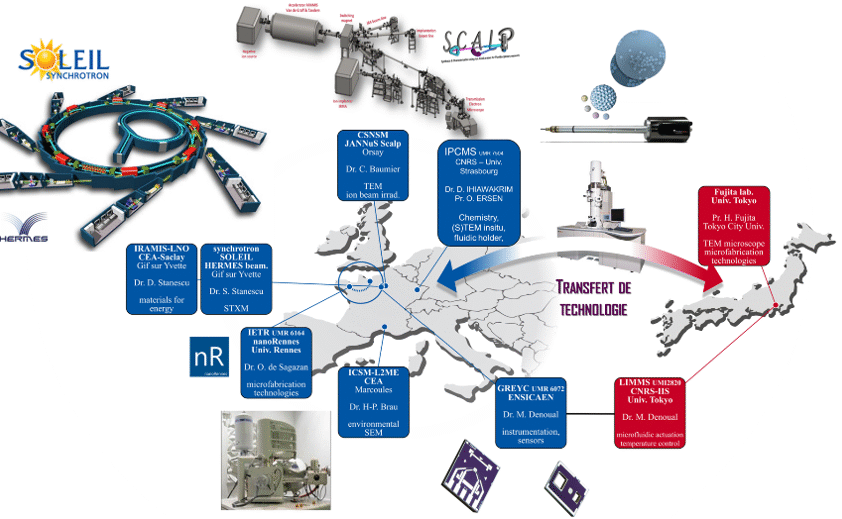
Nos missions au CNRS sont la valorisation de la recherche sous toutes ses formes, de l’enseignement, de la formation, de la collaboration national et international, du transfert de technologies et de connaissances, via des partenariats avec le monde industriel et des acteurs publics.